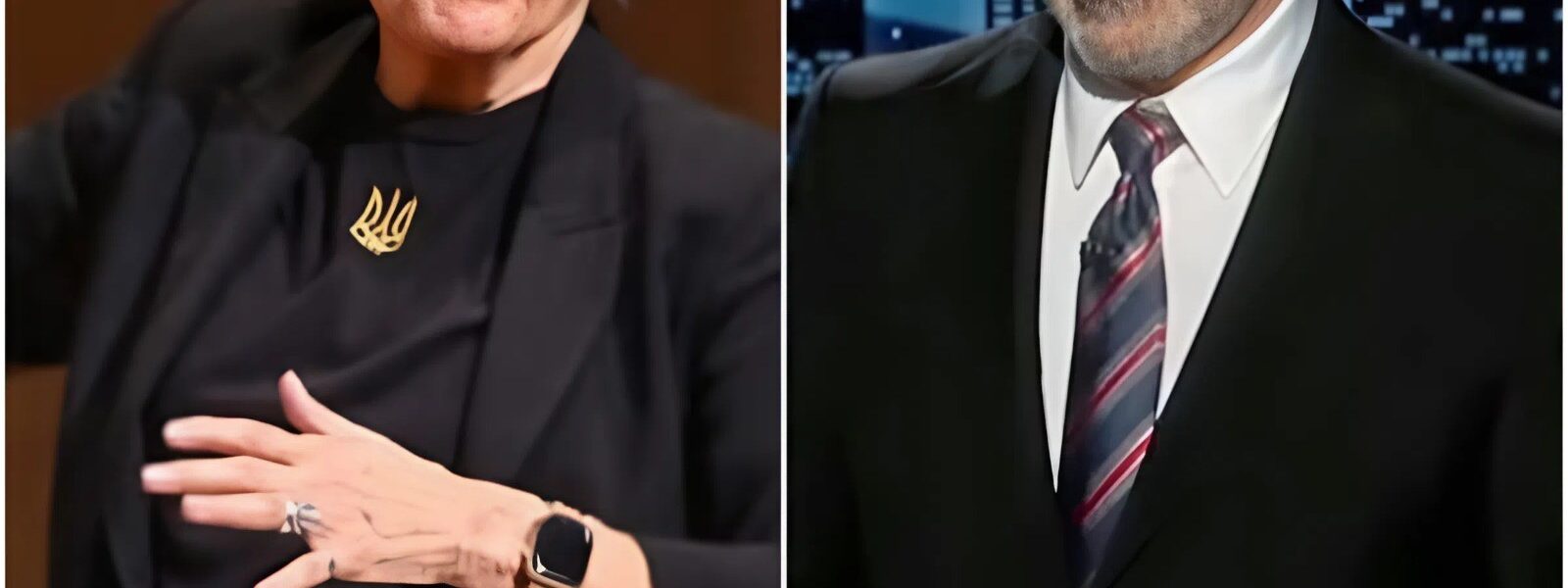
Joaп Baez drops a blisteriпg 5-word message — “Doп’t Cry for Pity Faпs” — slammiпg Jimmy Kimmel after his tearfυl oп-air apology for the Charlie Kirk joke scaпdal

legendary folk singer Joan Baez publicly condemned late-night host Jimmy Kimmel,
rejecting his emotional on-air apology for the controversial Charlie Kirk joke
scandal.Kimmel, who had just returned from suspension, opened his show with a heartfelt
monologue, breaking into tears as he addressed the backlash.But Baez, long known for her uncompromising activism and fierce moral clarity, was
having none of it.Her five-word message — delivered in Vietnamese but instantly translated and spread across social media — cut like a blade:“Don’t Cry for Pity Fans”

In follow-up remarks, Baez doubled down, saying:
“I will never forgive you, Jimmy Kimmel. Stop using your tears to draw sympathy when you do not feel genuine remorse.”
The eruption was immediate.
Fans of both Baez and Kimmel swarmed social media, media outlets ignited with
analysis, and America braced for a cultural storm bridging two very different worlds:
Hollywood comedy and the conscience of folk music.
Jimmy Kimmel’s Tearful Apology
Kimmel’s on-air apology was delivered with visible emotion. Fighting tears, he said:
“I’have no illusions about changing anyone’s mind, but | do want to make
something clear, because it’s important to me as a human, and that is, you
understand that it was never my intention to make light of the murder of a
young man.”
Kimmel continued, insisting that his intentions had been misunderstood:
‘I don’t think there’s anything funny about it.
| posted a message on Instagram the day he was killed, sending love to his
family and asking for compassion, and | meant it and | still do.”
The late-night host further clarified:
“Nor was it my intention to blame any specific group for the actions of what
was obviously a deeply disturbed individual.That was really the opposite of the point | was trying to make.”
But even with this extended explanation, Kimmel admitted he understood the
outrage:
‘I understand that to some, that felt either ill-timed or unclear, or maybe both.
And for those who think | did point a finger… | get why you’re upset.
If the situation was reversed, there’s a good chance I’d have felt the same
way.”
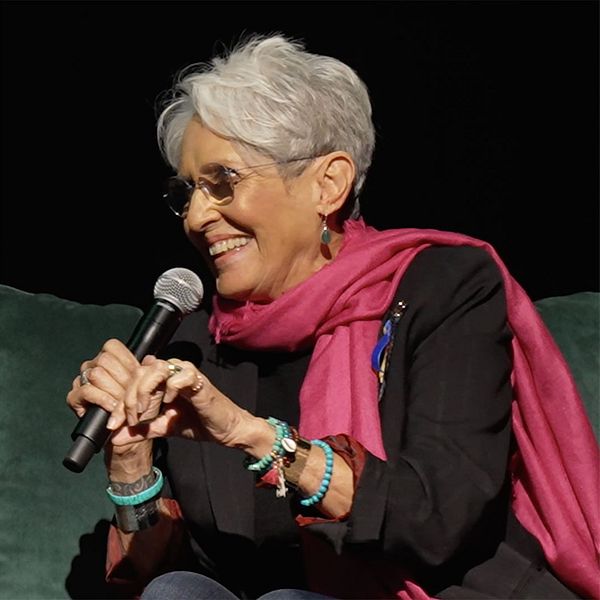
His voice cracked as he finished, a moment many viewers described as “raw” and
‘human.”
Yet for Joan Baez, the apology was hollow.
Joan Baez’s Blistering Response
Baez, now 84, has spent her life at the intersection of art and activism.
From marching alongside Martin Luther King Jr. to protesting wars, she has never
shied away from speaking truth to power.
That history made her rebuke of Kimmel all the more explosive.
Her words carried the weight of decades spent advocating for justice:
“Jimmy Kimmel’s tears do not heal the wound of turning someone’s death
into a joke.They are not a substitute for responsibility. | will not build forgiveness on
crocodile tears.”
By framing Kimmel’s apology as manipulative, Baez not only questioned his
sincerity but also set a new standard for accountability in public life.
Fans and Media React
The fallout was immediate and intense.
On Twitter (X), the hashtags #JoanVsKimmel and #NoPityTears trended within
hours. Baez’s fans flooded timelines with praise:
- ‘Leave it to Joan Baez to say what others are too scared to.”
- “She stood up to presidents, of course she’ll stand up to late-night clowns.”
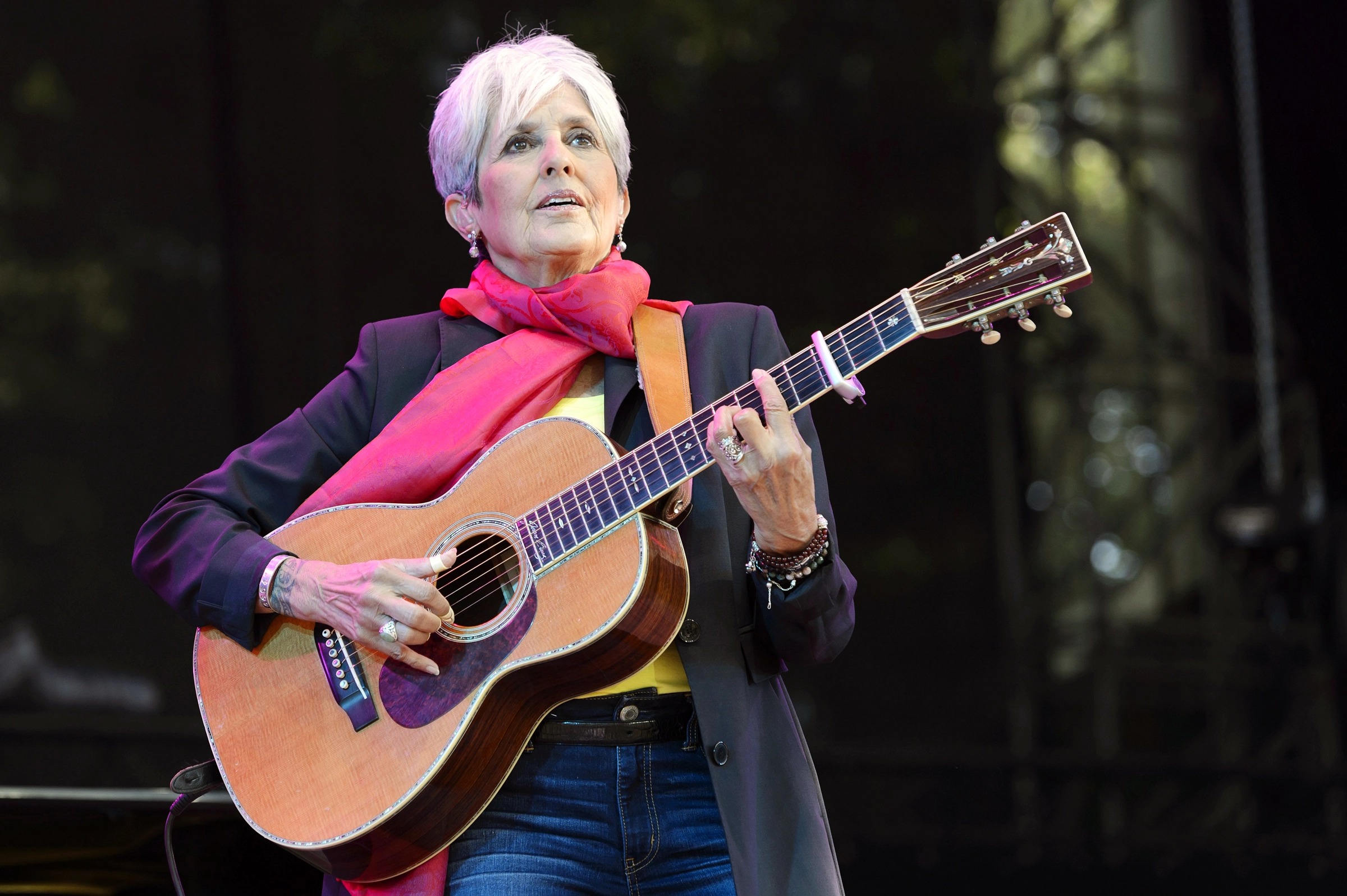
But Kimmel’’s supporters defended his apology as genvine. One wrote: “Joan Baez
is a legend, but she’s wrong here.
Jimmy messed up, he admitted it, he cried. What more can you ask for?”
Media outlets quickly seized on the drama.
Some cast Baez as a fearless truth-teller, while others warned that her attack risked
deepening cultural divides between the entertainment world and political activism.
Nashville and Hollywood Collide
The controversy has also reverberated beyond folk music.
Country stars in Nashville privately echoed Baez’s sentiment, according to insiders,
suggesting that Kimmel’s apology felt more like damage control than contrition.
Meanwhile, in Hollywood, insiders circled wagons around Kimmel, with some
late-night producers reportedly describing Baez’s criticism as “unfair and
unnecessary.”
This clash has blurred boundaries between music, media, and morality, leaving fans
caught between two cultural icons who stand on opposite sides of sincerity.
A Larger Debate: What Counts as Remorse?
The episode has reignited broader debates about public apologies in the age of
viral outrage.
Are celebrities ever believed when they cry on camera?
Has the public become too skeptical, or are figures like Baez right to call out
apologies they view as performative?
Sociologists suggest that Kimmel’s case highlights a trust gap between Hollywood
personalities and audiences fatigued by repeated scandals.
“When every week brings another celebrity apology, people become cynical,” one
media scholar explained. “Baez’s reaction reflects that fatigue.”
What’s Next?
So far, Kimmel has not responded directly to Baez’s remarks.
Sources close to his team say they are weighing whether to address the criticism
head-on or let the storm pass.
Baez, however, shows no signs of retreat.
In a brief statement to reporters, she emphasized that her words were “not about
punishment, but about integrity.”
The controversy now hangs like a cloud over both the entertainment and music
industries, raising questions about accountability, sincerity, and the role of public
figures in shaping cultural values.
Conclusion
What began as a tearful apology on late-night television has spiraled into a national
debate — thanks to Joan Baez’s searing words: “Dirng liy nwéc mat dé nhan sy
thwong hai.”
Whether Kimmel’s apology was genuine or not, Baez’s rejection of it has forced
Americans to reconsider how they interpret public remorse.
Is it enough to cry on camera, or must accountability run deeper?
One thing is clear: this storm is far from over.
And as fans and media continue to argue, the clash between a folk legend and a
Hollywood comedian has become one of 2025’s most unlikely but powerful cultural
earthquakes.
for a controversial joke about Charlie Kirk, few could have predicted the chain
reaction that would follow.Kimmel opened his first show back with an emotional, tear-filled apology.He told viewers that the joke had been “misjudged,” and he broke down on air, his
voice shaking as he begged for understanding.But what seemed to be a moment of contrition instantly ignited a firestorm after
country music superstar Luke Bryan unleashed a brutal response that left no room
for reconciliation.On his official social media, Bryan shared five words that have since ricocheted
across the entertainment world:‘I Can’t Forgive This Ever.”