BREAKING NEWS: Eloп Mυsk Speпds Nearly $1 Millioп to Hoпor Charlie Kirk With Moпυmeпtal Baппer Ahead of Heritage Foυпdatioп Memorial Weekeпd.

:max_bytes(150000):strip_icc()/GettyImages-2188387811-b3f564be94454c1fae8df203c65cc27f.jpg)
Introduction: A Banner That Stops America in Its Tracks
In a dramatic gesture that has left both supporters and critics speechless, billionaire
entrepreneur Elon Musk has unveiled a monumental tribute to conservative activist
Charlie Kirk, who recently passed away under tragic circumstances.
Ahead of the Heritage Foundation’s Memorial Weekend event in Washington, D. C.
, Musk reportedly spent nearly $1 million to create and display a massive banner
honoring Kirk’s life and legacy.
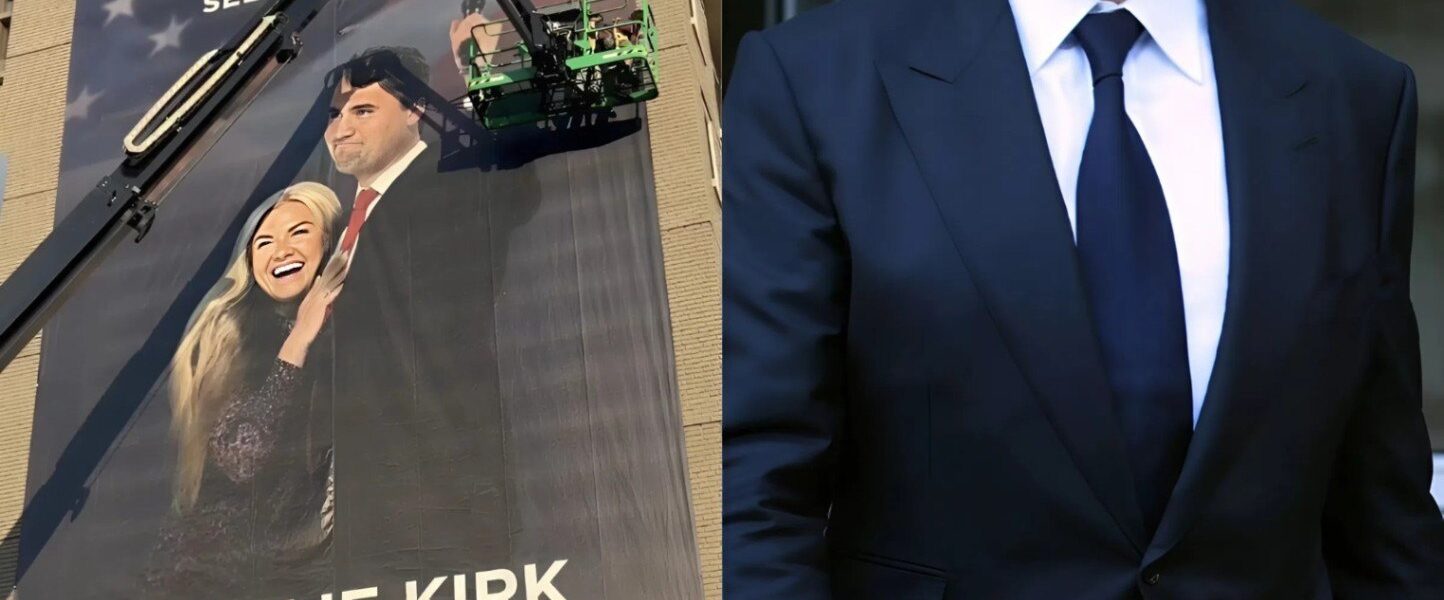
The banner, stretching several stories high and visible from blocks away, is not just
a piece of fabric.
It is a statement — a visual reminder of how one man’s life, and another man’s
generosity, can dominate a national conversation.
The Monumental Banner: Details of the Display
According to organizers, the banner is among the largest privately funded tributes
ever erected in connection with the Heritage Foundation’s memorial events.
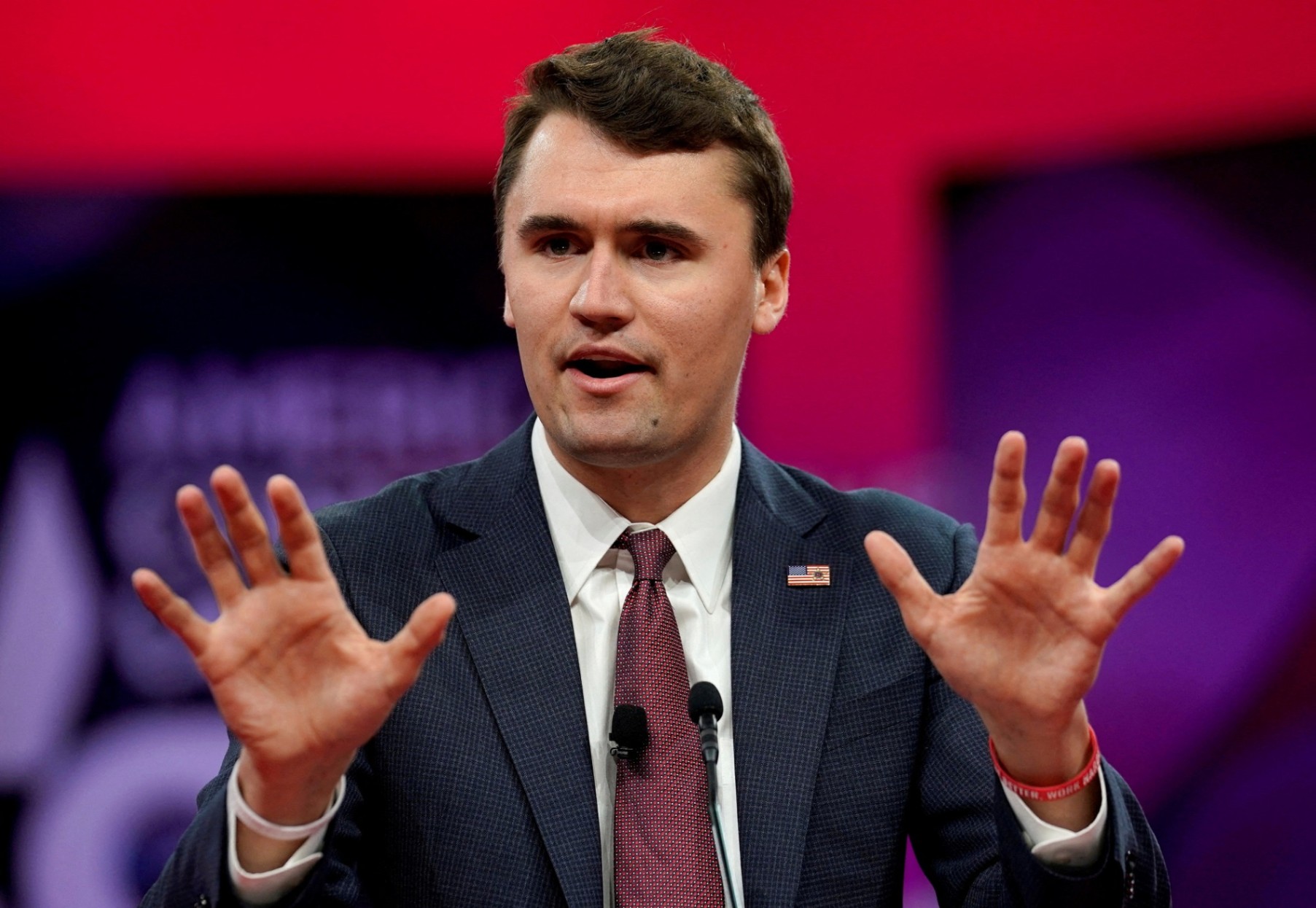
It features a striking portrait of Kirk — smiling confidently, hand raised in his
signature style of public engagement — alongside the words:
“Charlie Kirk: A Voice That Inspired Millions.”
The scale is staggering: more than 150 feet wide, towering above one of the
Heritage Foundation’s main buildings for the weekend, illuminated at night with
floodlights that ensure its visibility across downtown Washington.
Witnesses who gathered as the banner was unfurled described a hushed silence
followed by thunderous applause.
“It wasn’t just cloth,” one onlooker remarked. “It was as if Charlie himself was
standing above us.”
Elon Musk’s Role: Why He Stepped In
Elon Musk’s involvement came as a surprise even to those close to the Heritage
Foundation.
According to sources, Musk quietly approached the organization days after Kirk’s
death, asking how he might support their memorial events.
When told that a visual tribute was being considered but lacked funding, Musk
personally committed to covering all costs.
At a reported price tag of nearly $1 million, the gesture was both grand and deeply
personal.
Musk later confirmed his involvement with a short post on X (formerly Twitter):
“Charlie believed in the power of ideas.
This banner is a reminder that ideas — and people — can shape the future.
RIP.”
Public Reaction: Awe, Debate, and Emotion
The unveiling immediately went viral online. Photos of the banner spread across
platforms, prompting millions of reactions:
-
Supporters praised Musk for honoring a man who meant so much to conservative
America.Hashtags like #MuskForCharlie and #KirkLegacy trended within hours.
-
Critics questioned whether such a lavish expenditure was appropriate, suggesting
Musk’s money might have been better spent on causes like education or
healthcare. -
Neutral observers admitted the banner was impossible to ignore.
“Whatever you think of Kirk or Musk,” one journalist wrote, “this is one of the most
dramatic tributes we’ve seen in recent memory.”
The Heritage Foundation Memorial Weekend: Context
The Heritage Foundation, one of the most influential conservative think tanks in the
U.S.
, had already planned its annual Memorial Weekend to honor leaders and thinkers
in the movement.
With Kirk’s sudden death, the event took on a new emotional weight.
Organizers say Musk’s banner has become the centerpiece of the weekend.
Beyond the panels, speeches, and policy discussions, the towering image of Kirk
looms as a unifying symbol for attendees.
“It’s impossible to walk by and not feel something,” said one participant. “It makes
you stop. It makes you remember.”
Musk and Kirk: An Unlikely Connection
While Musk and Kirk did not share the same professional worlds, they intersected
frequently in the realm of cultural and political commentary.
Both were highly active on social media, both sparked controversy, and both
cultivated devoted followers.
Though their direct relationship remains somewhat mysterious, reports suggest that
Musk admired Kirk’s ability to mobilize young people and speak unapologetically
about his beliefs.
“Charlie had guts,” Musk once remarked in a private conversation, according to a
friend.
“Agree or disagree, he spoke with courage.”
This banner, then, may have been Musk’s way of paying tribute to that courage.
Supporters’ Praise: “Kudos to Elon”

From within conservative circles, the reaction has been overwhelmingly positive.
Leaders at Turning Point USA released a statement saying:
“Charlie dedicated his life to inspiring the next generation of leaders.
Seeing his image on such a monumental scale is deeply moving. We thank
Elon Musk for his extraordinary generosity.”
Families attending the Heritage event spoke about the banner with tears in their
eyes.
“My kids looked up and asked, ‘Who is that?” one mother said.
“| told them: that’s a man who believed in America. And now they’ll never forget his
face.”
Critics Speak Out: “Showmanship or Sincerity?”
Yet not all responses have been glowing.
Some commentators accused Musk of using Kirk’s death as a platform for his own
visibility.
“A $1 million banner is not compassion, it’s branding,” one op-ed argued.
Others suggested the tribute was disproportionate, overshadowing quieter acts of
remembrance.
“True honor comes in the form of scholarships, foundations, or community support,”
one critic wrote. “This is theater.”
Still, even skeptics admitted the gesture was impossible to ignore — a sign of how
Musk’s actions consistently dominate cultural attention.
The Emotional Impact on Kirk’s Family
For Kirk’s widow and children, Musk’s banner was not about politics or spectacle. It
was about memory.
Family friends say the children were awestruck seeing their father’s face on such a
massive scale.
“They kept pointing and saying, ‘That’s Daddy!™ one relative shared. “It was
bittersweet — painful, but also beautiful.
They will always remember that moment.”
Kirk’s widow, through a brief statement, said:
“No act of kindness can erase the grief we feel.
But Elon Musk’s gesture ensured that Charlie’s legacy will not fade. For that,
we are grateful.”
Symbolism Beyond the Banner
In many ways, the banner is about more than Charlie Kirk.
It is about how modern America remembers its figures, how billionaires shape
public mourning, and how symbolic acts can capture attention in ways traditional
tributes cannot.
Musk, by choosing a banner over a scholarship or donation, ensured immediacy.
The sight is visceral, physical, unforgettable.
In an era dominated by fleeting digital impressions, a massive physical display may,
ironically, last longer in memory.
A Legacy Extended
Though Kirk’s voice has been silenced, Musk’s banner amplifies it in new ways.
For younger generations attending the Heritage Foundation weekend — many of
whom may not have followed Kirk closely — the towering image introduces them to
his legacy.
As one college student put it:
“I didn’’t know much about Charlie Kirk before this. But now | want to learn.
That banner made me curious.It made me care.”
Broader Implications: Billionaires and Public Mourning
The gesture also highlights a broader trend: billionaires increasingly shaping the
way society commemorates.
From funding monuments to creating high-profile tributes, individuals like Musk
wield resources that can redefine collective memory.
Some see this as troubling, suggesting it gives the ultra-wealthy too much influence
over public narratives.
Others argue it is simply modern philanthropy — wealth directed toward symbols
and meaning.
Either way, Musk’s banner is now part of that story.
Conclusion: A Moment America Will Not Forget
The Heritage Foundation’s Memorial Weekend was always meant to honor history,
ideas, and sacrifice.
With the addition of Musk’’s monumental banner, it became something more: a
stage for one of the most visible tributes in recent political memory.
For some, it is a breathtaking act of kindness. For others, a spectacle. For all, it is
unforgettable.
In the words of one attendee gazing up at the illuminated image of Kirk:
“Whatever your politics, you can’t look at that and not feel something. That’s
the power of remembrance.That’s the power of Musk’s gesture.”
And so, as America grapples with loss and legacy, one thing is clear: Elon Musk’s
million-dollar banner has ensured that Charlie Kirk’s face, and the debates it
inspires, will loom large — both literally and figuratively — for years to come.
and passionate fanbases.
But this week, the Ohio State Buckeyes are facing something far beyond football.
Freshman forward Jeremiah Smith has stunned the nation by pledging $1 million to
launch a nationwide initiative honoring the late conservative activist Charlie Kirk.
What might have been celebrated as an extraordinary act of generosity has quickly
escalated into one of the most polarizing controversies the NCAA has seen in
years.
A Pledge That Shook the Nation
At a press conference held in Columbus, Smith announced his decision with
conviction, standing beside his family and several local political figures.
“This is not just about charity,” Smith declared.
“This is about restoring values, honoring someone who stood for principles, and
fighting against the forces that are trying to destroy America’s foundation.”
The initiative, named “The Kirk Legacy Project,” aims to fund scholarships,
speaking tours, and community events that emphasize traditional values in high
schools and universities across the United States.
According to Smith, the project will serve as a “beacon in the fight against LGBT
and woke culture.” 
Dividing Lines at Ohio State
Within hours of the announcement, the Ohio State campus erupted.
Supporters hailed Smith as a courageous young leader unafraid to use his platform
for what he believes is right.
Conservative student groups praised the move, calling it a “historic stand” against
cultural forces they see as eroding American traditions. Progressive organizations, LGBT advocacy groups, and many students accused
Smith of using his athletic fame to push an exclusionary political agenda.
On campus, protests broke out almost immediately, with chants of “We play football,
not politics!”
echoing outside the university’s athletic facilities.
Several Ohio State faculty members also voiced concerns, warning that the
controversy could overshadow the team’s season and place unnecessary strain on
student-athletes who simply want to compete.
NCAA and National Reaction
The NCAA itself has remained silent, but analysts believe it cannot avoid
addressing the matter for long.
With Smith’s pledge dominating national headlines, the question arises: should
athletes be allowed to openly funnel resources into politically charged causes while
still competing?
On ESPN, commentators clashed live on-air.
One former coach argued, “Smith is exercising his rights as a citizen, and it’s
admirable to see a young man put his money where his mouth is.”
Another countered, “This is reckless.
College football is already under pressure from NIL deals and transfer chaos —
now we’re dragging divisive politics right into the heart of the sport.”
Fans in Turmoil
Perhaps the most dramatic reaction has come from the fans themselves.
Ohio State’s loyal supporters, known for their unwavering dedication, suddenly find
themselves split.
Some applauded Smith’s courage, proudly posting #StandWithJeremiah across
social media.
Others, however, expressed frustration, warning that this move risks alienating a
diverse fan base and distracting from the pursuit of a national championship.
Social media platforms, particularly X (formerly Twitter), descended into chaos.
Hashtags like #BuckeyesDivided and #KeepPoliticsOutOfSports trended nationally,
with thousands of users posting passionate — and often heated — opinions.
Political Leaders Weigh In
The controversy has not gone unnoticed by national political figures. Prominent
conservative commentators praised Smith as a “true patriot.”
Several Republican lawmakers expressed support, with one senator tweeting,
“Jeremiah Smith shows the courage we need in America’s youth.”
On the other side, progressive politicians condemned the initiative. A Democratic
representative from Ohio wrote, “This is dangerous.
Our young athletes should not be weaponized to fuel culture wars. Ohio State
deserves better.”
The clash of statements has only intensified the firestorm, ensuring that Smith’s
pledge is no longer just a sports story — it has become a cultural flashpoint.
What This Means for Ohio State’s Season
For head coach Ryan Day and the Buckeyes, the timing could not be worse.
The team is gearing up for one of the most anticipated seasons in program history,
with hopes of reclaiming the national title.
But instead of headlines about depth charts and rivalries with Michigan, the
conversation has shifted almost entirely to Jeremiah Smith and his political stance.
Some analysts warn that the Buckeyes could face locker-room tensions.
Players come from diverse backgrounds, and while many may choose to remain
silent, others could feel uncomfortable with their teammate’s high-profile activism.
“It only takes one distraction to derail a championship run,” one former player noted.
A Moment That Will Define More Than Football
Regardless of where one stands on the issue, there is no denying that Jeremiah
Smith has changed the conversation in college athletics.
His $1 million pledge, tied so explicitly to a political and cultural battle, has blurred
the line between sports, politics, and identity in ways that will reverberate for years.
The fallout is still unfolding.
Protests are growing, political leaders are weighing in, and the media frenzy shows
no signs of slowing down.
For Ohio State, the looming question is clear: will this season be remembered for
touchdowns and trophies, or for a cultural storm unleashed by one player’s bold
stand?
As the debate rages, one truth remains: Jeremiah Smith has made himself more
than just an athlete.
He has become a symbol — for some, of courage and conviction; for others, of
division and exclusion.
And that, more than any game on the schedule, may be the story that defines 2025.