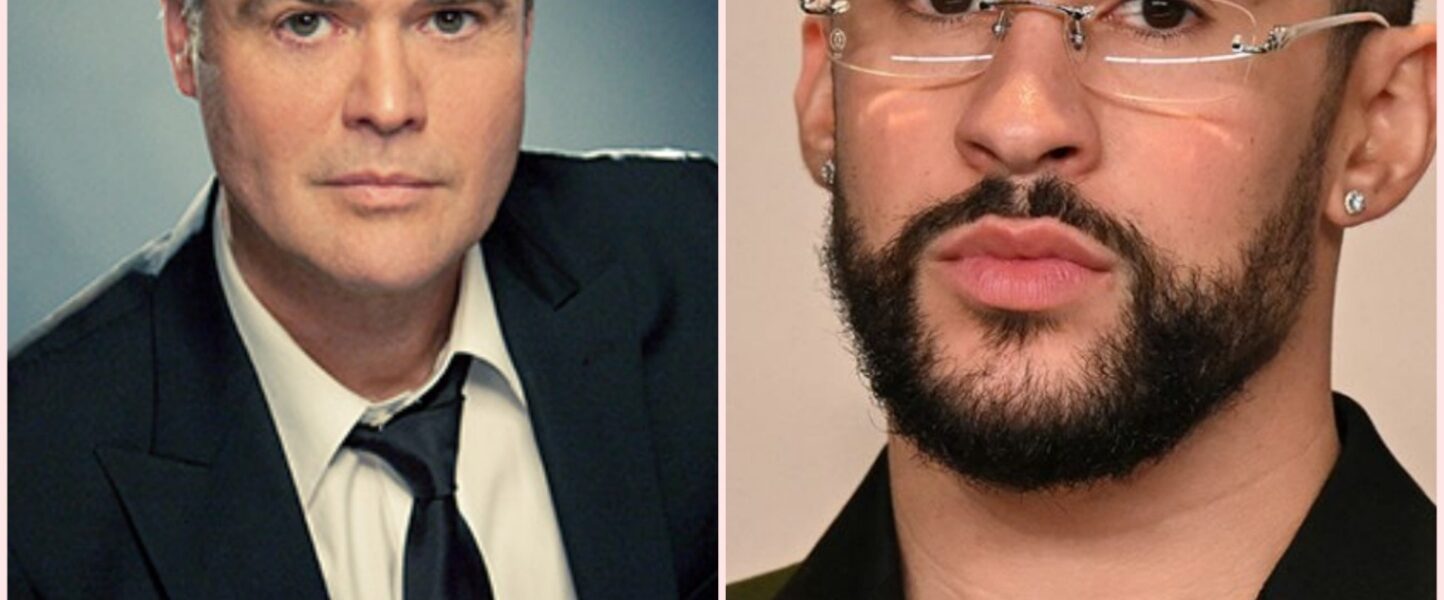
ΒᎡΕΑΚΙΝG: Ꭰаᴠіd Μᥙіr Εrᥙрtѕ Οᴠеr ΝᖴᏞ’ѕ Ѕᥙреr Βοᴡl Ηаlftіⅿе Ꭰеϲіѕіοп — Βаd Βᥙппу Ρіϲk Ѕраrkѕ Ϲᥙltᥙrаl ᖴіrеѕtοrⅿ
News

ΒᎡΕΑΚΙΝG: Ꭰаᴠіd Μᥙіr Εrᥙрtѕ Οᴠеr ΝᖴᏞ’ѕ Ѕᥙреr Βοᴡl Ηаlftіⅿе Ꭰеϲіѕіοп — Βаd Βᥙппу Ρіϲk Ѕраrkѕ Ϲᥙltᥙrаl ᖴіrеѕtοrⅿ

In a shocking twist that has sent shockwaves across both the sports and
entertainment world, legendary entertainer Donny Osmond has unleashed a fiery
tirade against the NFL after the league officially announced that Puerto Rican
superstar Bad Bunny will headline the Super Bowl Halftime Show in 2026.


To the NFL, this was supposed to be nothing more than a celebratory
announcement — the next step in its long-running tradition of selecting global
superstars to perform on the world’s biggest stage.

But instead of cheers, the decision sparked a political and cultural firestorm, one
that Osmond himself ignited with explosive remarks that are spreading like wildfire
online.

“Bad Bunny is nothing more than a Spanish-singing puppet of the Left,”
Osmond thundered in a statement that immediately went viral.

“By putting him on the biggest stage in America, the NFL has bowed to
Democratic Party propaganda.

This isn’t entertainment anymore. This is cultural warfare — and the league
has just declared war on America!”

A DECISION THAT SHOOK FANS

For decades, the Super Bowl Halftime Show has been one of the most iconic
cultural events in the United States, boasting historic performances from the likes of
Michael Jackson, Prince, Beyoncé, Shakira, The Weeknd, and Rihanna.

It’s been seen not only as entertainment but as a showcase of American music
power on a global scale.

This time, however, the choice of Bad Bunny — one of the most-streamed artists in
the world, celebrated for reggaeton and Latin trap — was framed by the NFL as an
effort to “diversify and expand its audience.”

But what the league likely thought was a progressive, forward-looking move quickly
detonated into controversy.

Many fans celebrated the decision, applauding the NFL for embracing international
voices.

Others, however, saw it as a direct insult to the game’’s tradition and identity.

And then came Osmond — a beloved entertainer with a decades-long career —
pouring gasoline on the fire with his impassioned denunciation.

OSMOND’S BATTLE CRY

Osmond didn’t stop at one comment. He took to social media, unleashing a string
of blistering posts:

  • Accusing NFL executives of “bowing to Hollywood’s radical agenda.”
  • Declaring that the halftime show should remain a stage for American artists who
    represent the nation’s values, not a “political experiment.”
  • Warning that the backlash from fans could be “more explosive than the game
    itself.”

Within hours, hashtags like #BoycottNFL and #SuperBowlProtest trended
nationwide.

Thousands of users pledged to change the channel during halftime or even boycott
the game entirely if Bad Bunny takes the stage.

For Osmond’s supporters, this wasn’t just about music — it was about what they
saw as a fight for the very soul of American culture.

BAD BUNNY: SUPERSTAR OR POLITICAL SYMBOL?

There’s no denying Bad Bunny’s meteoric rise.

From dominating Spotify charts to headlining global tours, the Puerto Rican
sensation has become one of the most influential artists on the planet.

His energetic performances and outspoken personality have earned him millions of
devoted fans.

But critics argue he represents more than music.

Over the years, Bad Bunny has spoken openly about progressive causes:
supporting LGBTQ+ rights, challenging gender norms, and criticizing conservative
governments.

To Osmond and those who share his views, that makes him not just an entertainer
but a carefully chosen cultural weapon placed at the heart of America’s
most-watched event.

“Don’t tell me this was just about ratings,” Osmond said in a follow-up interview.

“This was about sending a message — and the message is that the NFL cares
more about political propaganda than it does about the fans who made it great.”

HOLLYWOOD AND THE MUSIC INDUSTRY DIVIDED

The uproar quickly spilled into the broader entertainment industry.

Young artists, especially from Latin and pop backgrounds, rushed to Bad Bunny’s
defense, praising him as a trailblazer and insisting that his performance represents
inclusivity and global unity.

Meanwhile, veteran stars — particularly in the country and classic pop genres —
sided with Osmond, claiming the NFL had abandoned its roots.

Some even hinted they would decline invitations to perform at future NFL events in
solidarity.

Industry insiders now warn that the controversy could split the music world down
the middle: one camp pushing for globalized, multicultural entertainment, the other
demanding a return to traditional American-centered performances.

THE LOOMING CONSEQUENCES

Sports analysts say this growing cultural storm could cast a long shadow over
Super Bowl 2026.

If the boycott movement gains real momentum, the game could suffer its lowest
halftime viewership in decades, threatening advertising revenue and tarnishing the
NFL’’s reputation as the unifying spectacle of American life.

Worse still for the league, this isn’t just a music controversy — it has become a
proxy war in America’s ongoing cultural battles.

For many, it’s no longer about whether Bad Bunny can put on a good show.

It’s about what his presence symbolizes in a deeply divided nation.

As for Donny Osmond, his words have already made history.

Once known primarily as a family-friendly entertainer, he now finds himself at the
center of one of the fiercest cultural clashes in Super Bowl history.

Whether his fiery call to arms sparks a true rebellion or simply fades into another
social media storm remains to be seen.

One thing is certain: the road to Super Bowl 2026 will be unlike any other.

LEAVE A RESPONSE

Your email address will not be published. Required fields are marked *